

Raising capital and pur
Organizations today are expected to deliver more than financial performance. In a rapidly changing world, long-term success depends on the ability to combine economic growth, social responsibility, strong governance, and environmental sustainability.
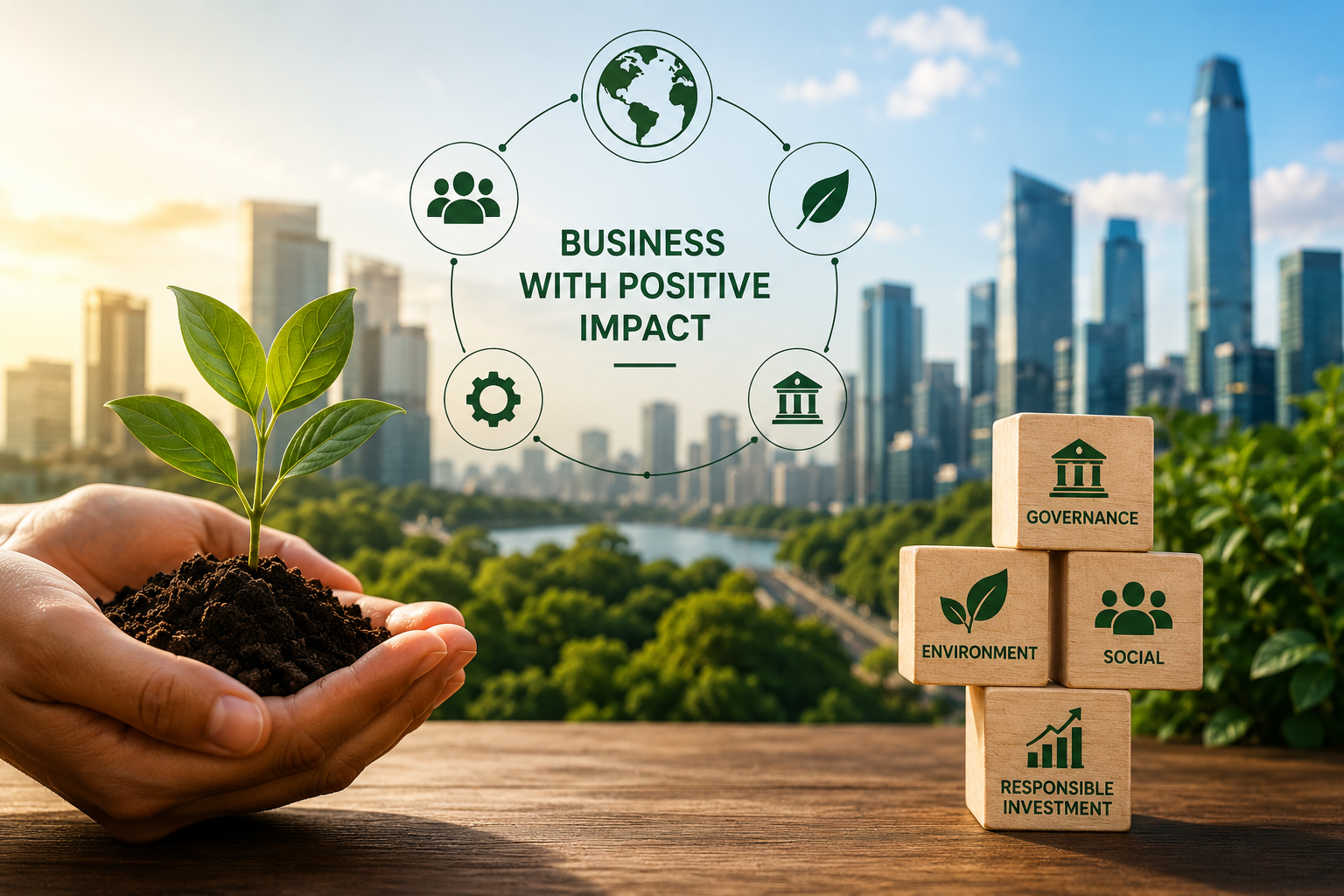
Business with positive impact is about creating value in a way that benefits not only organizations, but also people, communities, and the planet. It reflects a long-term approach to growth—one that is responsible, resilient, and aligned with the challenges of our time.
Why Positive Impact Matters
As global expectations evolve, businesses are being called to play a broader role in society. Investors, clients, employees, and communities increasingly value organizations that operate with integrity, reduce environmental and social risks, and contribute to meaningful progress.
This means success can no longer be measured by profit alone. It must also be measured by the ability to:
- Create long-term sustainable value
- Strengthen communities and stakeholder trust
- Support ethical business practices
- Reduce environmental and social impact
- Build resilience for the future
Sustainability as a Business Strategy
Sustainability is no longer a standalone initiative. It is a core business principle that helps organizations make better decisions, manage risk, and identify long-term opportunities.
A sustainable business strategy can help organizations:
- Improve governance and accountability
- Increase transparency across operations
- Strengthen responsible practices throughout the value chain
- Support innovation and long-term resilience
- Align investment and business priorities with global challenges
By integrating sustainability into strategy, organizations can create stronger foundations for growth while delivering measurable social and environmental value.
The Role of Governance in Creating Sustainable Value
Strong governance is essential for organizations seeking to generate positive impact. Effective governance helps ensure that purpose, strategy, and day-to-day decision-making are aligned.
Governance supports:
- Clear oversight and accountability
- Better risk management
- Regulatory compliance
- Ethical leadership and decision-making
- Long-term value creation
Boards, executive teams, and governance committees play a critical role in building trust, guiding priorities, and embedding sustainability into organizational culture.
Responsible Investment and Long-Term Impact
There is growing recognition that responsible investment can be a powerful driver of transformation. Capital allocation decisions now increasingly consider not only financial return, but also long-term environmental, social, and governance performance.
A purpose-driven investment approach may include evaluating:
- Environmental and social risks
- Corporate governance practices
- Human rights and labor standards
- Resource efficiency
- Innovation potential
- Contribution to long-term sustainable outcomes
This approach can also include ongoing monitoring, stakeholder engagement, and support for measurable improvement across sustainability priorities.
Key Topics Shaping the Future of Sustainable Business
Organizations focused on sustainability and positive impact are increasingly addressing several critical themes.
Responsible Capital
Capital has the power to accelerate positive change when directed toward initiatives that combine financial performance, ethics, and long-term value.
Sustainable Cities
As urban populations grow, organizations must rethink infrastructure, buildings, mobility, and quality of life to support more sustainable cities.
Responsible Production and Consumption
More circular and efficient models are essential for reducing waste, emissions, and inequality across supply chains and production systems.
Energy Transition
The shift toward renewable energy is critical for addressing climate change, reducing carbon emissions, and building a more resilient economy.
Sustainable Food Systems
Innovation in agriculture and food production is increasingly important to meet global demand while reducing pressure on natural resources.
Transparency and Continuous Improvement
Sustainability is an ongoing journey. It requires continuous monitoring, clear reporting, regular review of practices, and a willingness to adapt to new risks and opportunities.
Transparency is a key part of this process. Sharing goals, progress, and commitments helps build credibility and strengthens relationships with stakeholders, investors, clients, and communities.
Building a More Resilient Future
Organizations across industries have both the opportunity and the responsibility to contribute to a more sustainable future. By embedding sustainability, governance, and positive impact into strategy, businesses can create lasting value while helping shape a fairer, more balanced, and more resilient world.